
Email Address
info@apade.ca
Phone Number
+1(819)639-5354
Our Location
2085 Assomption Street, Orleans,ON, K4AAK1
info@apade.ca
+1(819)639-5354
2085 Assomption Street, Orleans,ON, K4AAK1
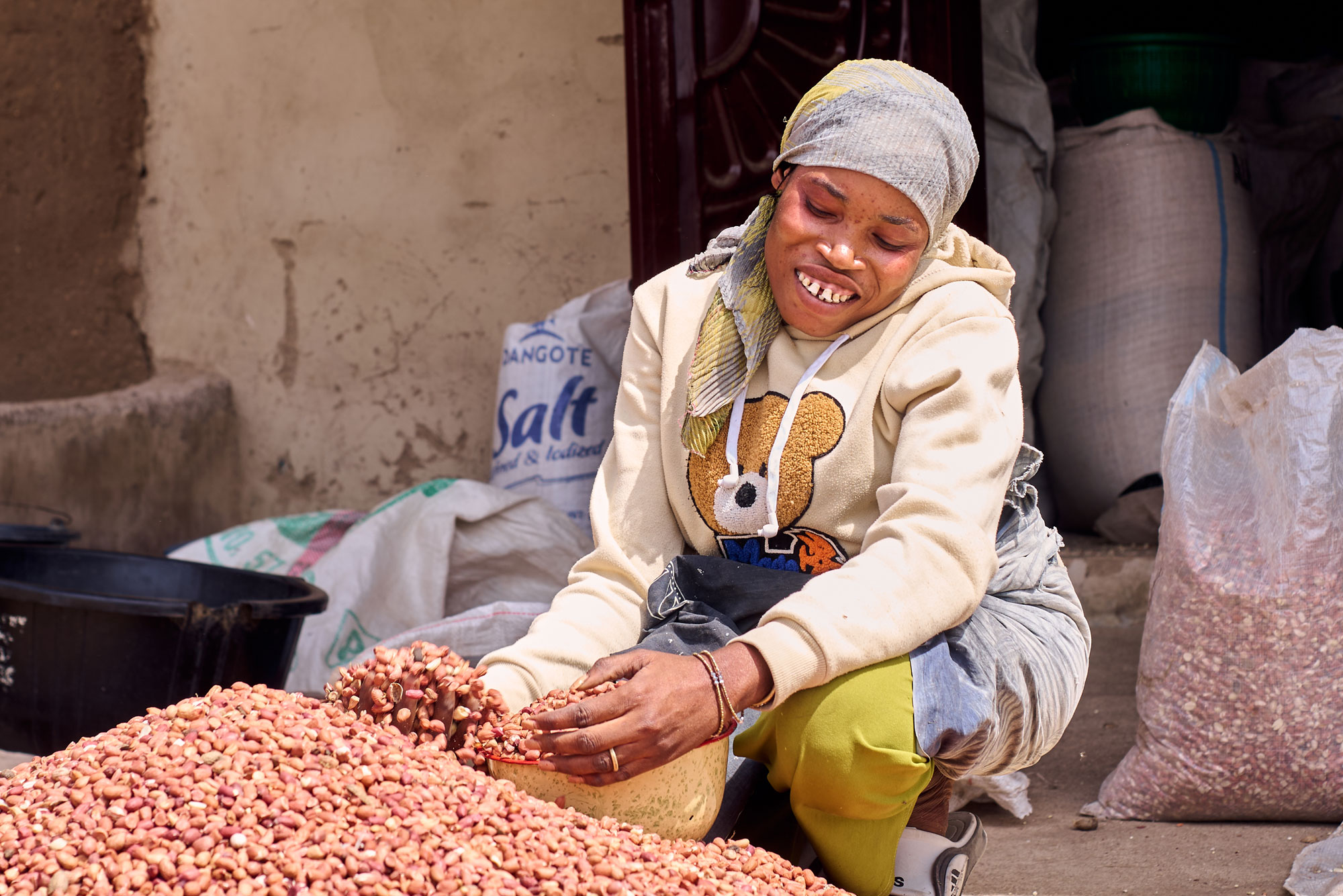
In Guruki, a remote agrarian community in Gombi Local Government Area of Adamawa State, Elizabeth Mohammed, a 28-year-old young woman living with a disability, is quietly redefining what inclusive economic opportunity can look like when young people are equipped with the right skills, confidence, and support systems. Her journey reflects the power of investing in young women and persons with disabilities as agents of growth, not only for themselves, but for their communities.
Before joining the Youth in Work project supported by the Mastercard Foundation and implemented by WFP, Elizabeth’s small grain aggregation and retail business was a means of survival rather than a pathway to growth. Trading mainly in groundnut and millet, she operated without formal business skills, savings mechanisms, or reliable support. Managing both aggregation and retail activities alone was physically demanding and financially risky.
“Before the Youth in Work project, I was not able to save and I struggled a lot to manage my business,” Elizabeth recalls. “Sometimes items would go missing in the shop, and I had to close the retail shop just to go to the market and sell my grains.”
These challenges limited her growth and income. At most, Elizabeth could store about 15 bags of grain, constraining her ability to respond to market demand or negotiate better prices. Like many young women with disabilities in rural areas, she faced compounded barriers such as limited access to finance, minimal bargaining power, and social perceptions that underestimated her ability to succeed as an entrepreneur.
Her trajectory began to shift when she was enrolled in the Youth in Work project in May, 2025, which focuses on equipping young women and men with market-relevant skills and capacities to build dignified and sustainable livelihoods in agriculture and agribusiness. Through structured training sessions, Elizabeth gained practical skills in business management, including record keeping, stock control, savings, and basic financial planning. The project also supported her with essential equipment to improve her business operations and the quality of her produce, including wooden pallets to keep grain bags off the ground, mudu measures (traditional containers used for both selling and measuring grains), and durable storage bags. For the first time, she began to view her grain business as an enterprise with long-term potential.
What accelerated Elizabeth’s progress, however, was not training or equipment alone. A defining feature of the Youth in Work approach in 2025 is the introduction of Village Business Development Volunteers (VBDVs). Young, locally rooted entrepreneurs trained by the project to provide ongoing mentorship and business development support to their peers. As trusted members of the community, the VBDVs bridged the gap between theory and practice, offering hands-on guidance tailored to the realities of local markets.
“The mentoring made a big difference,” Elizabeth explains. “My mentor understood my business and my challenges because they live in this community like me. I was able to ask questions freely and get practical solutions.”
Beyond trust, the BDV model is intentionally designed to be sustainable. These young mentors are themselves entrepreneurs who are building Business Development Services as a source of income, creating a local ecosystem where skills, services, and enterprise development reinforce one another. Through regular follow-ups and coaching, Elizabeth was supported to apply what she learned, review her progress, and adjust her business strategies.
Within just six months of participating in the project, Elizabeth’s business began to transform. She introduced structured record keeping, strengthened stock management, and adopted a disciplined savings culture. Profits were reinvested strategically rather than absorbed by immediate household needs. As her operations became more organized, losses from theft or mismanagement disappeared.
“I now save consistently at least 5,000 (NGN) a week depending on market situation and I have employed four young people who work with me,” she says with pride. Two support aggregation and sales at the grain market, while the other two manage the retail shop, ensuring continuity and accountability. For the first time, Elizabeth could expand without overstraining herself physically.
Her storage capacity increased from 15 bags to more than 50 bags [OF WHAT VALUE] of assorted grains, including groundnut and millet, significantly improving her ability to respond to market opportunities. Her income has grown from about 70,000 (NGN) in profit a month to 150,000 (NGN), improving household food security and enabling her to contribute more reliably to family needs such as paying school fees and buying household foodstuff.
Elizabeth’s success has also begun to shift social norms in her community. As a young woman with a disability employing other youths, she is increasingly recognized as a capable business leader. Her increased control over income has strengthened her voice in household decision-making, while her role as an employer demonstrates the economic potential of inclusive, youth-led agribusiness.
Today, Elizabeth’s ambitions extend beyond her current achievements. She envisions expanding into wholesale grain trading, accessing larger markets in Gombi grain market, and creating more employment opportunities for young people, especially women facing barriers similar to hers.
“My vision is to become a leading wholesaler and create more jobs for youths, especially women like me,” she says.
Elizabeth’s journey underscores the Youth in Work project’s core objective: that when young people are equipped with relevant skills, supported through trusted local mentorship, and connected to viable market opportunities, agriculture becomes not just a livelihood of last resort, but a pathway to dignity, resilience, and shared prosperity.
Subscribe to our Quarterly Newsletter to stay updated with Apade activities and impacts across all locations.
All for Peace and Dignity
Copyright © 2026. All rights reserved.